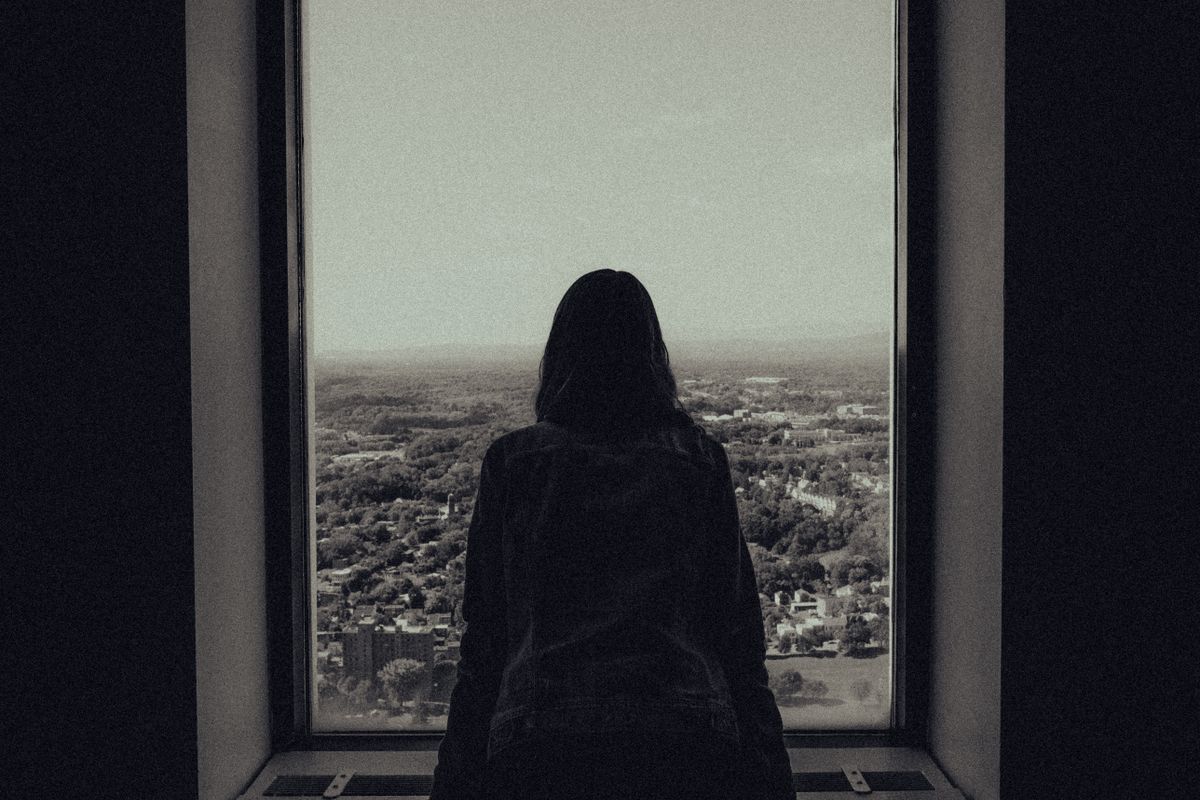
At eight o'clock the whole tower came to its windows and clapped. Pots and spoons, cupped hands, a man on the fourteenth floor with an actual brass trumpet — two minutes of joyful noise for the doctors and the nurses and the ones holding the line. From the street it must have sounded like gratitude. From the ninth floor, where Reshma stood in her scrubs with her key in the door, it sounded like an accusation she couldn't name.
She was the line. She had spent the day on a ward where the clapping did not reach, where she had held a phone to the ear of a man who could no longer speak so his daughter could say the last thing, and then sanitised her hands and done it again two beds down. She did not feel like a hero. She felt like a person who had been handed more grief than one body was built to hold, and was being asked, at eight o'clock, to come home and be applauded for it.
She stood in the corridor and listened to her neighbours celebrate her through the walls, and found she could not make herself turn the key. Not while the noise was going. Not while she was still, in their kind and terrible imaginations, a symbol instead of a woman who badly needed to sit down on the floor of her own hallway and cry.
0